

Get Her in the Game
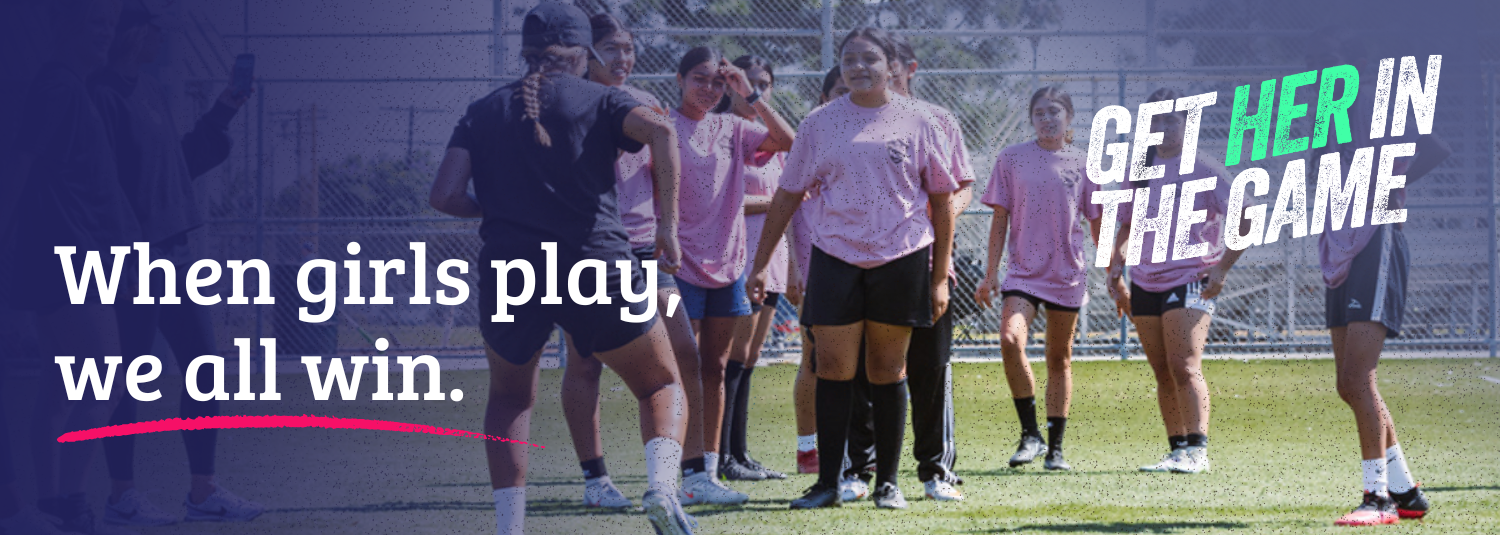
What Is IT?
Get Her in the Game is a practical playbook created by the National Recreation and Park Association in partnership with Nike to help communities increase girls’ participation in youth sports and create environments where girls feel welcomed, supported, and safe.
Rather than focusing only on programs, this playbook looks at the systems around sport—policies, facilities, coaching, communication, and partnerships—and shows how small, realistic changes can lead to meaningful impact.
Why Does It matter?
Although opportunities for girls in sport have grown, girls remain underrepresented in youth sports and women remain underrepresented as coaches and leaders. Many barriers are structural, not motivational—such as limited access to facilities, cost, lack of women coaches, uniforms that don’t feel inclusive, or programs that don’t reflect girls’ interests.
This playbook helps communities move beyond “add a girls’ program” toward long-term, equity-driven solutions that improve access, retention, and overall sport experience for girls.
Who Can Benefit From It?
- Parks & Recreation staff and coordinators looking for actionable strategies to improve access, equity, and program quality
- Directors and administrators seeking guidance on policy changes, goal setting, and accountability
- Coaches and volunteers interested in building girl-supportive, confidence-building team environments
- Parents and caregivers who want to understand what inclusive, high-quality youth sports should look like
- Schools, nonprofits, and community partners working to expand sport access and collaboration
- Girls and youth leaders whose voices are essential in shaping programs that truly meet their needs
What’s inside the playbook
The playbook is designed to be flexible and easy to use. Rather than prescribing one-size-fits-all programs, it focuses on improving the systems around youth sports that often unintentionally limit girls’ access and long-term participation. It offers concrete strategies, real-world examples, and reflection tools that can be adapted by parks and recreation agencies, community partners, coaches, parents, and local leaders.
Inside the playbook, readers will find guidance and examples related to key topic areas, including:
- Change Policies and Practices: Focuses on removing structural barriers that limit girls’ participation, such as inequitable facility access and scheduling, program fees and financial assistance, uniforms and equipment, and safeguarding practices that support both physical and emotional safety.
- Build a Coaching Pipeline: Highlights the importance of women coaches and officials in recruiting and retaining girls in sport, with strategies for intentional recruitment, flexible coaching roles, training and mentorship, and long-term coach support and retention.
- Invite Youth Voice: Encourages agencies to design programs with girls, not just for them, by elevating youth voice through advisory boards, leadership pathways, junior coach or referee roles, and meaningful feedback loops.
- Amplify Communications: Shows how language, imagery, and outreach strategies can either invite or unintentionally exclude girls, emphasizing messaging around fun, belonging, confidence, social connection, and “no experience needed.”
- Strengthen Partnerships: Outlines ways to collaborate with schools, nonprofits, universities, businesses, and community leaders to expand access, share resources, and build sustainable girls’ sports programming.
- Measuring Progress: Provides tools and indicators to assess current practices, identify gaps, set clear goals, and track progress toward more equitable youth sports systems over time.
Overall, Get Her in the Game is a resource for anyone invested in youth sports—offering a clear, accessible roadmap to help ensure girls have equal opportunities to play, grow, and lead through sport.